Does Invisalign take longer than traditional braces? Understanding cosmetic dentistry treatment timelines is essential for planning and expectations. When it comes to orthodontia, treatment duration depends on multiple factors, including the complexity of alignment, patient compliance, and the type of malocclusion.
While traditional braces remain effective, Invisalign offers flexibility and comfort. Want to see if clear aligner therapy is right for you? Call (630) 629-5700 to request a consultation with Dr. Julie Glud at Dental Care of Lombard, IL, today!
What Is Invisalign?
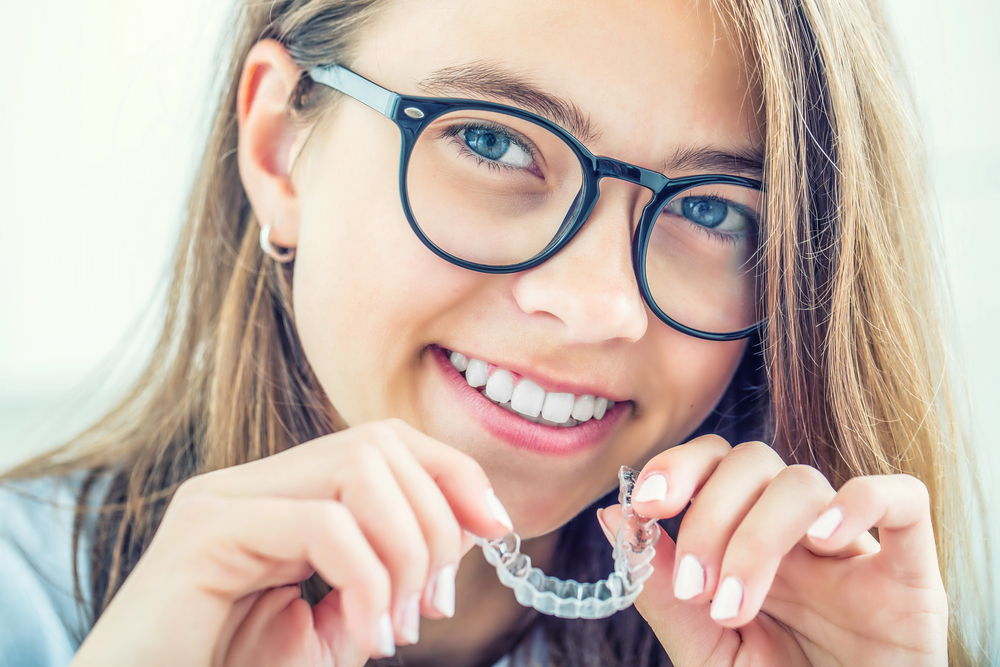
Invisalign is a system of clear, temporary aligners designed to gradually move teeth into proper alignment. Unlike traditional braces, Invisalign uses a series of custom-made, clear trays that fit snugly over teeth.
Typically, patients switch trays every one to two weeks. Each tray applies gentle pressure, slowly guiding teeth into better positions.
Invisalign is popular for its aesthetic appeal and convenience. That’s why many tweens, teens, and adults prefer this option over traditional braces.
How Long Does Invisalign Treatment Usually Take?
Treatment duration varies depending on individual needs. On average, Invisalign treatment ranges from 12 to 18 months, although some minor adjustments may take as little as six months.
Complex cases, such as significant crowding or bite issues, may extend treatment to 24 months or longer. However, your Lombard dentist explains that compliance is key. This means wearing aligners at least 20 to 22 hours daily to ensure timely progress and optimal results. Removing them frequently for meals or snacks can extend treatment duration significantly.
How Braces Compare in Treatment Duration
Traditional braces often take 18 to 24 months for full treatment, though some cases require more time. Braces rely on metal brackets and wires, adjusted periodically by an orthodontist or dentist to guide teeth.
While braces are effective for nearly all alignment issues, they can feel restrictive and affect comfort and oral hygiene. Patients who ask whether Invisalign takes longer than braces often find that, in mild to moderate cases, treatment time is comparable or even shorter with Invisalign.
Factors That Affect Invisalign Treatment Time
Several factors influence the duration of Invisalign treatment, including:
- The complexity of misalignment
- Patient compliance and oral hygiene
- Age and bone density
- Supplemental treatments, like interproximal reduction, attachments, or elastics
Understanding these variables helps patients set realistic expectations.
The Role of Compliance in Invisalign Efficiency
Unlike braces, Invisalign relies heavily on patient responsibility. This is because the aligners are removable, so patients must adhere to recommended wear schedules. Subsequently, skipping hours or forgetting aligners can delay progress significantly.
In most cases, patients who wear aligners consistently tend to finish treatment in the expected timeframe. This contrasts with braces, where progress is more controlled by the dental professional, but adjustments may still be needed if brackets or wires loosen.
Benefits of Invisalign Beyond Treatment Time
Even when treatment duration is similar, Invisalign offers unique advantages, such as:
- Clear aligners are virtually invisible, which is preferred by adults and teens.
- Smooth plastic trays reduce irritation compared to metal brackets.
- Patients can eat, brush, and floss normally.
- Digital treatment planning helps visualize each stage.
These benefits often outweigh small differences in treatment duration, making Invisalign attractive to many patients.
When Braces May Be Faster
For complex cases involving severe crowding, bite corrections, or rotational issues, braces may allow more direct and faster adjustments. Traditional wires can exert stronger forces, which sometimes shortens treatment for these cases.
As a result, your Lombard dentist may recommend braces over Invisalign if predictability and efficiency are priorities in complex orthodontic cases.
Digital Planning and Its Impact on Invisalign Duration
Modern Invisalign treatments use digital scans and 3D modeling. This technology predicts tooth movement and helps optimize treatment sequences. Therefore, digital planning reduces surprises and helps patients finish on schedule.
Research shows that digitally planned aligner treatments often improve efficiency and predictability, particularly for mild to moderate alignment issues. This aspect makes Invisalign a compelling alternative to braces.
Combining Invisalign With Other Cosmetic Dentistry Procedures
Patients undergoing Invisalign treatment sometimes combine it with other cosmetic dentistry, such as whitening or veneers. Planning these procedures alongside orthodontic treatment can streamline care. That’s why our Lombard dentist often coordinates timing so that patients achieve optimal aesthetic outcomes while completing alignment efficiently.
Common Misconceptions About Invisalign Duration
Many people assume Invisalign always takes longer than braces. While compliance and case complexity matter, treatment duration is often comparable. Here are more myths about Invisalign:
Invisalign Is Only for Mild Cases
While best for mild to moderate cases, advanced cases can still benefit from hybrid treatment plans.
Aligners Are Less Effective
Properly worn aligners are clinically effective for many orthodontic needs. However, wearing aligners for the prescribed amount of time daily is key to successful outcomes.
Treatment Is Pain-free
Both braces and Invisalign involve pressure and adjustment. However, many patients report enhanced comfort with aligners when compared to rough metal braces.
Tips to Ensure Efficient Invisalign Treatment
Patients can take several steps to finish treatment on schedule. Here’s what our Lombard dentist recommends:
- Wear aligners 20 to 22 hours daily
- Follow Dr. Glud’s instructions carefully
- Attend scheduled check-ups consistently
- Maintain good oral hygiene
- Address any issues with aligners promptly, such as cracks or fit problems
These steps make a significant difference in efficiency and outcomes.
Invisalign or Braces? Verify Your Candidacy at Dental Care of Lombard
When patients ask whether Invisalign takes longer than braces, the answer is: it depends. For mild to moderate cases, duration is similar or sometimes shorter. However, compliance is essential, and complex cases may still be faster with traditional braces. Luckily, our dentist in Lombard, IL, can evaluate your case and provide a personalized treatment timeline.
Ultimately, Invisalign is not inherently slower than braces. It provides flexibility, aesthetics, and comfort without compromising effectiveness, especially when patients follow professional guidance.
Whether you choose braces or Invisalign, an early consultation with Dr. Julie Glud at Dental Care of Lombard ensures that treatment is efficient, predictable, and aligned with your goals. So, click here to request an orthodontics consultation, or contact us at (630) 629-5700 to learn more about your options.