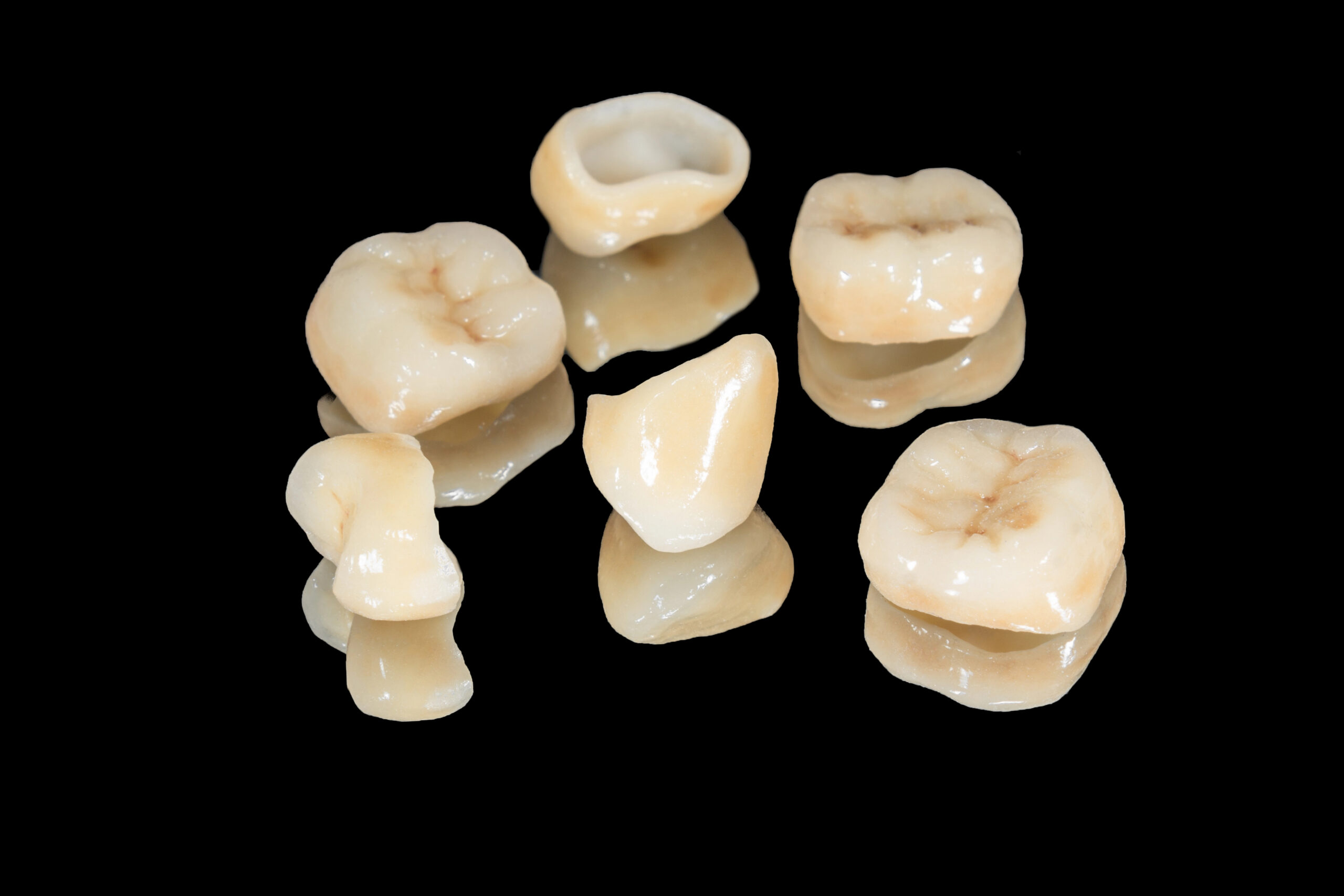
If you are exploring restorative dentistry in Lombard, IL, it’s important to understand how modern materials perform under daily chewing forces and long-term stress. That’s why Dr. Julie Glud is here to explain what metal-free dental crowns are, how they compare to traditional types, and what the research says about their strength and longevity.
No matter what material you choose, dental crowns at Dental Care of Lombard are uniquely designed for protection and endurance. Need a new or replacement crown? Call (630) 629-5700 for an appointment with Dr. Glud today!
What Are Metal-Free Dental Crowns?
Metal-free dental crowns are restorations made without metal alloys. So, instead of a metal substructure, these crowns use ceramics or advanced composites.
This means they can be more natural-looking than traditional crowns that contain metal. Metal-free options include materials such as:
- Zirconia
- Lithium disilicate
- Porcelain
These materials aim to combine strength with aesthetics, making them increasingly popular for visible teeth.
Why People Choose Metal-Free Options
Many patients prefer metal-free crowns because:
- They look more like natural teeth
- They avoid metal allergies or sensitivities
- They offer a more conservative aesthetic in smiles
- They blend seamlessly with adjacent teeth
Strength Matters: Can Metal-Free Crowns Withstand Bite Forces?
A major concern about metal-free dental crowns is strength. When chewing, teeth endure forces ranging from light pressure to heavy grinding.
Modern materials have improved dramatically. Zirconia, for example, has flexural strength greater than many metals used in older crowns. This means it resists bending under pressure. Lithium disilicate, while slightly less strong, provides impressive results in aesthetic zones.
The Science Behind Strength and Durability
Recent studies support the strength of metal-free dental crowns. For example, research comparing zirconia and metal crowns found that zirconia options withstand similar, if not better, chewing forces and stress cycles. Laboratory tests measure fracture resistance, and many metal-free crowns perform within ranges acceptable for clinical use.
Types of Metal-Free Materials Explained
When it comes to metal-free dental crowns, you have options, including:
Zirconia Crowns
Zirconia is a polycrystalline ceramic. It offers:
- High fracture resistance
- Excellent wear tolerance
- Minimal risk of chipping
- Strong performance in posterior teeth
Zirconia crowns can handle heavy bite forces, making them suitable for back teeth where chewing pressure is highest.
Lithium Disilicate Crowns
Lithium disilicate is known for its beauty and strength. It offers:
- Natural translucency
- Strong adhesion with dental cement
- Reliable performance in front teeth and some posterior cases
While not as strong as zirconia in heavy bite zones, lithium disilicate crowns provide excellent aesthetics.
Porcelain Crowns on Ceramic Substructures
Some metal-free crowns use layered porcelain over a ceramic core. These provide beautiful results but must be designed carefully to avoid chipping. Dentists often choose them for front teeth, where appearance is critical.
When Are Metal-Free Crowns Most Appropriate?
Dr. Glud may recommend metal-free dental crowns when:
- The tooth is visible when smiling
- You value aesthetics highly
- You have metal sensitivities
- The bite forces are moderate to high but manageable with strong ceramics
- You want restorations that mimic natural translucency
Some cases still require traditional metal-based crowns, especially when severe bite issues or grinding (bruxism) are present.
How Fit and Design Affect Strength
Strength is not just dependent upon the material you choose. How a crown fits and how it is cemented also affect performance.
Precise digital impressions and careful preparation by Dr. Glud and her team contribute to better outcomes. This is why we prioritize precision in manufacturing and placement of all crowns, regardless of material.
Caring for Metal-Free Dental Crowns
Metal-free dental crowns require the same care as natural teeth. Good habits like these help ensure a long life:
- Brush twice a day with nano-hydroxyapatite or fluoride toothpaste
- Floss daily to remove plaque interdentally and at the gum line
- Visit Dr. Glud regularly for cleanings and exams
- Wear a night guard if you grind your teeth or clench your jaw
- Avoid chewing ice or hard objects
Are Metal-Free Crowns More Expensive?
Metal-free dental crowns can cost more than basic metal options due to material quality and design technology. However, many patients find the aesthetic advantages worth the investment.
Potential Downsides to Metal-Free Crowns
While strong, metal-free crowns are not perfect for every case. Possible concerns include:
- Chipping in layered porcelain crowns
- Higher cost than basic metal or porcelain-fused-to-metal options
- Need for precise fit and careful bite adjustment
Comparing Metal-Free to Traditional Metal Crowns
Metal-based crowns have a long track record of strength, especially for back molars with intense chewing demands. They resist fracture well but can show up when speaking, yawning, or laughing. Metal-free crowns avoid these visual issues and still provide excellent strength for most patients.
Real Patient Perspectives
Patients who choose metal-free crowns often report:
- Improved confidence in their smile
- Satisfaction with how natural teeth look
- Comfort with bite and speech
- Enjoyment of a restoration that blends with adjacent teeth
These real-world reflections align with clinical evidence on performance and longevity.
Questions to Ask Your Dentist in Lombard, IL
Before selecting metal-free dental crowns, ask Dr. Glud:
- Is this material strong enough for my bite?
- What is its expected lifespan?
- Will the crown blend with my natural teeth?
- What fabrication and design technology do you use?
- How will we protect adjacent teeth?
The Future of Metal-Free Dentistry
Developments in dental materials continue to improve strength and aesthetics. As a result, innovations in ceramics and composite materials expand options for patients seeking metal-free solutions. Plus, ongoing research supports the use of advanced ceramics in a wider range of cases, making them more accessible to more patients.
Metal-Free Dental Crowns in Lombard, IL
Metal-free dental crowns are indeed strong enough for most clinical needs. Zirconia, lithium disilicate, and other advanced ceramics offer excellent strength, exceptional wear resistance, and natural appearance.
If you are considering restorative treatment that includes dental crowns, click here to book a consultation with Dr. Julie Glud, or call Dental Care of Lombard at (630) 629-5700 to have an honest conversation with our team about your metal-free options.